Tyler’s budget focused on protecting homeowners' investments
Published on September 09, 2026
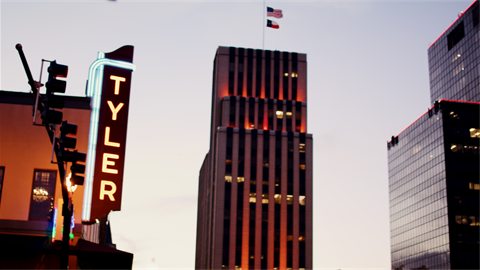
For most families, a home is one of the largest investments they will ever make. The City services surrounding that home, from streets and drainage to water, parks and emergency response, help protect that investment and the community around it.
That idea is at the center of the City of Tyler’s adopted Fiscal Year 2026-2027 budget.
The adopted property tax rate is 24.2063 cents per $100 of taxable value, compared with 23.6452 cents last year. For the average Tyler homestead, the increase is approximately $48 per year, or about $4 per month.
The budget continues investments in reliable infrastructure and public safety while challenging departments to find ways to provide the same or better service more efficiently. During the months-long budget process, staff reviewed personnel, equipment, contracts, technology and operating costs to determine what was necessary, what could wait and where the City could work differently.
Several of those changes are expected to produce both better service and long-term savings. The City will bring some street maintenance and park mowing work back in-house, while technology already traveling Tyler streets on City vehicles will help identify pavement concerns. New route technology will also help Solid Waste staff evaluate operations and improve efficiency.
Results residents can see
The investments Tyler has made are already producing measurable results.
The City’s Pavement Condition Index increased from 72 in 2021 to 76 in 2026, reversing a previous decline in overall street conditions. Broadway Avenue, once among the 50 most congested roadways in Texas, fell to 120th by 2025. Crime totals also decreased 21% from 2021 to 2025.
Over the last decade, the City has renovated or updated all 28 parks and is adding Tyler’s first new park in 20 years. Tyler Police maintains CALEA accreditation, while Tyler Fire holds an ISO Class 1 rating, the highest available classification.
These investments reflect a broader view of public safety: dependable Police and Fire response, maintained streets, drainage that helps protect homes during heavy rain, working water and wastewater systems, and public spaces that strengthen neighborhoods.
Planning before needs become emergencies
The budget also prepares for approximately $12.3 million in Police and Fire vehicles and equipment that must be replaced as they reach the end of their service lives.
Half of the Fire Department’s frontline and reserve engine fleet is operating beyond its expected service life, and six of the City’s 12 engines have more than 100,000 miles. Meanwhile, a fire engine that cost approximately $600,000 only a few years ago now costs about $1 million, and delivery can take 30 to 40 months.
The City is considering longer-term financing for those purchases so critical equipment can be replaced before failures affect emergency response, while spreading the cost over the years the equipment will serve Tyler.
Investing in water, wastewater and drainage
The adopted budget includes $13.6 million in cash-funded water and wastewater improvements.
Since 2016, outside of federally mandated Consent Decree projects, the City has invested more than $113.5 million in its water and wastewater systems. Most of that investment has been cash-funded, with $35 million financed through bonds.
Most residential customers will not see an increase in their water consumption rate. For customers inside the City, the rate for the first 25,000 gallons remains $3.75 per 1,000 gallons, and residential wastewater volume charges remain capped at 10,000 gallons. Changes to higher-use tiers primarily affect commercial and industrial customers.
Beginning Jan. 1, stormwater fees will also be based more closely on the amount of hard surface on a property instead of water use. The change is intended to better connect what a property pays with the amount of stormwater runoff it creates.
The Regulatory Compliance Fee will increase by $5 in October and another $5 in January, reaching $36.17 per month. That revenue is dedicated to debt for federally mandated wastewater improvements and cannot be used for other City programs.
More information
The FY 2027 budget continues Tyler’s long-standing focus on fiscal discipline by finding efficiencies where possible, maintaining infrastructure before problems become more costly and planning for major needs before they become emergencies.