Wastewater
The function of the sanitary sewer collection system is to safely and efficiently collect and transport wastewater from the point of use to the point of treatment. The sanitary sewer collection system consists of around 700 miles of mains ranging in size from 6" in diameter to 54" in diameter.
Water Service Center personnel are responsible for protecting public health by reducing sewer spills through the operation and maintenance of all sewer mains, manholes, cleanouts, and other system components in accordance with Federal, State, and local rules and regulations. This is accomplished by making repairs as needed to pipelines and appurtenances, performing preventative maintenance such as cleaning pipelines and manholes, and adjusting the depths of manholes and cleanouts as required during construction of other projects and improvements. Proper maintenance of the wastewater collection system aids in reducing the amount of inflow and infiltration into the collection system, which reduces treatment costs and increases treatment plant efficiency.
Report wastewater issues to the Water Service Center during regular business hours at (903) 531-1285 option 4. For emergencies after hours, on weekends, or holidays, please call the Golden Road Water Treatment Plant at (903) 597-6541.
Wastewater Treatment
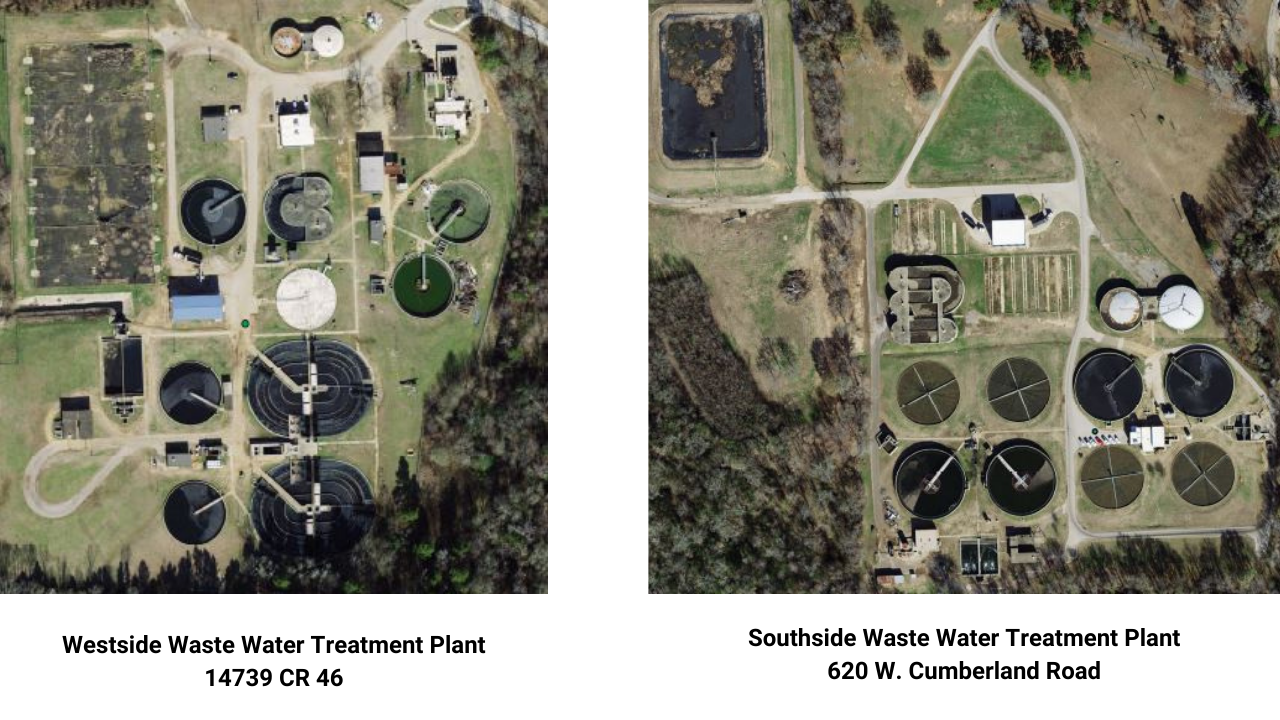
The Wastewater Utilities department operates and maintains the City's two wastewater treatment plants, as well as 22 sewer lift stations throughout the wastewater collection system.
Contact the Wastewater Treatment Systems Manager at (903) 939-8278.
2023 Wastewater Treatment Plants Master Plan
Wastewater Pretreatment
The City of Tyler's Pretreatment Program monitors industrial and commercial users to ensure their discharges into the wastewater collection system comply with local, state, and federal regulations. This is critical to prevent pollutants from entering the wastewater treatment plant and protect water quality. The program also oversees the permitting and inspections of liquid waste haulers that operate in the city.
Pretreatment phone number: (903) 595-7286
Private Sewer Lateral
A private sewer lateral (PSL) is the pipe that connects your home's plumbing to the City of Tyler sanitary sewer line, usually located under your street. This pipe carries all of the wastewater from your home to the sewer, including everything washed down your sink or flushed down your toilet.
Watch TWU Project Engineer explain the private lateral sewer rehabilitation project in the video below.
New Sewer Taps
Installation of sewer service connections (taps) from the main to the property line or point of user connection is performed only by Water Service Center personnel or a contractor approved by the Director of Utilities and Public Works. A fee is charged for each new tap to a sewer main for a connection. Contact the Water Business Office at (903) 531-1230 to schedule a sewer tap and to pay the applicable fee(s).
Sewer Backups
If your sewer backs up, please call the Water Service Center during regular business hours at (903) 531-1285 option 2 or 3. A crew can make sure the blockage is not in the city-owned portion of the pipe before you incur the expense of a private plumber.
For emergencies after hours, on weekends or holidays, please call the Golden Road Water Treatment Plant at (903) 597-6541.
Cleanouts
It is a good idea for all property owners and tenants to become familiar with the general layout of their plumbing system, especially the location of their sewer cleanout. The cleanout cover is usually located in the yard and allows easy access to the more distant parts of the private sewer line so blockages may be removed. A plumber can help locate sewer cleanouts.
Know the 3 Ps
Wipes damage pipes!
Only flush human waste and toilet paper as these break down in the wastewater system. Place wipes, tissues, diapers, paper towels and other waste in the trash to keep the sewer system flowing.
Know the 3 Ps!
Pee, poop, (toilet) paper.
Fat, Oils and Grease (FOG)
Pouring food, oil and grease down the drain can clog and damage your pipes and sewer lines.
Fats, oils and grease, known collectively as FOG, represent the most serious enemy of our sewer lines.
Guard your drains from FOG!
- Butter
- Cooking oil
- Salad dressing
- Mayonnaise
- Grease
- Gravy
- Sauces
- Food/meat scraps
- Lard
- Margarine
- Shortening
When FOG is dumped down the drain, it forms large, thick grease balls that clog pipes. Clogged pipes can result in sewer backups and spills, create environmental problems, cause traffic tie-ups or even flood homes and businesses. Commercial food-handling facilities contribute greatly to FOG buildup in sewer lines because of the amount of grease used in cooking and other food prep work. Preventing sewer backups from FOG blockages also saves money.
Important! When sewer pipes back up on private property, the homeowner or business owner is responsible for the cleanup.