Stormwater Management Program
Environmental Protection
We strive to maintain high stormwater quality and manage stormwater retention systems to protect our environment. Our efforts include monitoring water quality and implementing best management practices (BMP's) for stormwater treatment.
Texas Law Regarding Bodies of Water
- Public vs. Private Streams: In Texas, streams are considered public if they are navigable in fact or by statute. A stream is navigable if it retains and average width of 30 feet from the mouth up.
- Groundwater Rights: Landowners own the groundwater beneath their property, but this right does not guarantee a specific amount of water.
- Surface Water Rights: Surface water rights are regulated by the Texas Commission on Environmental Quality (TCEQ), and landowners must obtain permits for the use of surface water.
- Streambed Ownership: The streambeds is considered public property up to the gradient boundary, which is the line halfway between the low and high-water marks.
If a creek runs through private property in Texas, the ownership and rights can depend on several factors:
- Navigability: If the creek is navigable in fact (meaning it can be used for transportation) or navigable by statute (retaining an average width of 30 feet from mouth up), it is considered public property. The state owns the streambed up to the gradient boundary, which is halfway between the low and high-water marks.
- Non-Navigable Streams: If the creek is not navigable, it is generally considered private property. The landowner owns the creek bed and the water within it.
- Permits and Regulation: Even for non-navigable streams, landowners may need permits for certain activities, such as building dams or other structures that could impact the water flow.
- Public Use: Even if a creek is on private property, the public may have the right to use it for activities like fishing or boating, depending on local regulations and the specific circumstances of the creek.
It's always a good idea to consult with Texas Commission on Environmental Quality (TCEQ) for specific advice and to ensure compliance with all relevant laws and regulation.
Clean Water Act
The current effort to improve the water quality in the Nation's streams started in 1972 with the passage of the Clean Water Act (CWA). The main emphasis of this legislation was to establish a system to control pollution from point sources, with the goal of reducing pollutants so that the water in our lakes and streams is both fishable and swimmable. To achieve this goal, the CWA established the National Pollutant Discharge Elimination System (NPDES). The NPDES requires that anyone discharging a pollutant from a municipal wastewater or industrial point source must obtain an NPDES permit, which specifies effluent limits, monitoring requirements, and enforcement mechanisms.
The CWA also contains regulations to address pollution from diffuse non-point sources. The EPA defines non-point source pollution as “any pollution associated with diffuse land use activities that cumulatively results in water quality degradation.” Phase I of the NPDES regulations required municipalities with populations over 100,000 to classify their stormwater runoff and develop programs to reduce the pollutants in their runoff.
On December 8, 1999, U.S. EPA promulgated regulations, known as Phase II, requiring permits for stormwater discharges from small MS4s and required small MS4s to obtain permit coverage by March 10, 2003. Since Texas has delegation authority to administer the NPDES program in the State, the TCEQ developed and released their draft TPDES Small MS4 General Permit on September 1, 2002, to meet the March 10 deadline.
A series of lawsuits followed the permit release, which ultimately ended up in the 9th Circuit Court. A suit brought by business groups, developers and a coalition of Texas cities and counties challenged the constitutionality of the Phase II regulations. On January 14, 2003, the U.S. 9th Circuit Court issued its decision in Environmental Defense Center et al. vs. EPA. The ruling upheld the Phase II regulations on all but 3 of the 20 issues that were contested. On September 15, 2003, the U.S. 9th Circuit Court of Appeals issued a revised panel decision, which denied all petitions for rehearing and remanded portions of the rule affecting small MS4s to the EPA. The Court found that portions of the federal regulations were not consistent with the CWA, because the Phase II rules did not address permitting authority review and public participation and notification. The three issues that were remanded back to EPA required that the Notice of Intent and SWMP be made available to the public and undergo meaningful review by the State to determine if the MEP standard is met, and there must be a process to accommodate public hearings.
An EPA guidance memo, dated April 16, 2004, was issued to permitting authorities and the TCEQ revised and released their second draft TPDES Small MS4 General Permit on August 8, 2005. After a second public comment period, the TCEQ revised and released the final TPDES Small MS4 General Permit on August 13, 2007.
The original general permit expired August 12, 2012, and the Small MS4 General Permit, TPDES Permit No. TXR040000, was reissued on December 13, 2013. Each subsequent permit is effective for five years from the date of issuance. This is the sixth SWMP for the City of Tyler and its sixth permit period; each SWMP is updated as required to comply with any new requirements promulgated with the new TXR40000, Small MS4 General Permit.
Minimum Control Measures
The City's current Stormwater Management Program consists of the following eight Minimum Control Measures (MCMs):
Public Education and Outreach
All permittees shall develop, implement, and maintain a comprehensive stormwater education and outreach program to educate public employees, businesses, and the community of the impacts of stormwater discharges on the local stormwater system, waterways, and waterbodies, as well as the steps that the public can take to reduce pollutants in stormwater.
To comply with the regulatory requirements for this program element, the following BMPs have been selected by the City of Tyler:
- Utility Bill Messages
- Social Media Posts
- Stormwater Literature
- Stormwater Website
- School Take Home Folders
- Storm Drain Marking by City Staff
- Public Service Announcements
- Stormwater Pollution Prevention Training
Public Involvement/Participation
All permittees shall involve the public, and, at minimum, comply with any state and local public notice requirements in the planning and implementation activities related to developing and implementing the SWMP. The MS4 operator shall create opportunities, or support activities, and that are coordinated by citizen groups such that residents and/or others can become involved with the SWMP.
To comply with the regulatory requirements for this program element, the following BMPs have been selected by the City of Tyler:
- Stream Cleanup Projects
- Other Clean-up Projects
- Adopt-A-Spot
- Educational Display/Booth
- Training Event
- Public/Stakeholder Meeting
Illicit Discharge Detection and Elimination (IDDE)
All permittees shall develop, implement, and enforce a program to detect, investigate, and eliminate illicit discharges into the small MS4. The program must include a plan to detect and address non-stormwater discharges, including illegal dumping to the MS4 system.
To comply with the regulatory requirements for this program element, the following BMPs have been selected by the City of Tyler:
- Storm Drain System Outfall Mapping
- Dry Weather Screening
- Illicit Discharge Ordinance and Enforcement
- Illicit Discharge Training
- Reduce Sanitary Sewer Overflows
- Reduce Failing Septic Systems
- Reduce Illegal Dumping
- Reduce Waste with Collection Events
- Reduce Pet Waste
- FOG Ordinance and Enforcement
- Reduce Floatable Waste
Construction Site Stormwater Runoff Control
All permittees shall develop, implement, and enforce a program requiring operators of small and large construction activities to select, install, implement, and maintain stormwater control measures that prevent illicit discharges to the MEP. The program must include the development and implementation of an ordinance or other regulatory mechanism, as well as sanctions to ensure compliance to the extent allowable under state, federal, and local law, to require erosion and sediment control.
To comply with the regulatory requirements for this program element, the following BMPs have been selected by the City of Tyler:
- Erosion Control Ordinance and Enforcement
- Erosion Control Plan Review
- Construction Site Inspection
- Construction Site Inspector Training
- Discharge Reporting
- Construction Site Inventory
Post-Construction Stormwater Management in Areas of New Development and Redevelopment
All permittees must develop, implement and enforce a program, to the extent allowable under state, federal, and local law, to control stormwater discharges from new development and redeveloped sites that discharge into the small MS4. This applies to projects that disturb one acre or more, including projects that disturb less than one acre that are part of a larger common plan of development or sale. The post-construction program must apply to both public and private development sites.
To comply with the regulatory requirements for this program element, the following BMPs have been selected by the City of Tyler:
- Post-Construction Ordinance and Enforcement
- Post-Construction BMP Manual
- Long-Term Post-Construction Operation and Maintenance
- Post-Construction Controls Inspection
Numerous studies have documented that stormwater runoff from developed areas can potentially contribute significant amounts of pollution to lakes and streams. The increase in impervious surfaces such as rooftops, roads, and parking lots can increase urban runoff and have a detrimental impact on aquatic ecosystems due to increased concentrations of sediment, nutrients, pesticides, road salts, heavy metals, pathogenic bacteria, and petroleum hydrocarbons. The best way to reduce the negative effects of stormwater from new development is to use BMPs to treat, store, and infiltrate runoff onsite before it can affect downstream waterbodies. Innovative site designs that reduce impervious areas and low impact development practices may be used to reduce stormwater runoff and improve water quality.
Pollution Prevention and Good Housekeeping for Municipal Operations
All permittees shall develop and implement an operation and maintenance program, including an employee training component that has the ultimate goal of preventing or reducing pollutant runoff from municipal activities and municipally owned areas including but not limited to: park and open space maintenance; street, road, or highway maintenance; fleet and building maintenance; stormwater system maintenance; new construction and land disturbances; municipal parking lots; vehicle and equipment maintenance and storage yards; waste transfer stations; and salt/sand storage locations.
To comply with the regulatory requirements for this program element, the following BMPs have been selected by the City of Tyler:
- Stormwater Pollution Prevention Training
- Recycling Program and Waste Disposal
- Vehicle Washing
- Vehicle Fueling
- Landscaping Practices
- Roadway Cleaning
- Storm Sewer System Operation and Maintenance
- Facility Specific SOPs
- Airport Operations
- City Facilities and Control Inventory
- City Operation and Maintenance Activities
- Contractor Oversight
- Evaluation of Flood Control Projects
Studies have documented that a considerable amount of pollution through stormwater runoff can be attributed to poor housekeeping practices. Stormwater that is allowed to run across areas of exposed stockpiled materials and debris containing chemicals and hazardous waste is a real concern. Stormwater pollution is also a concern when the general public and municipal systems are performing preventive maintenance activities such as washing vehicles and distributing chemicals for lawn care.
Industrial Stormwater Sources
Permittees who operate Level 4 small MS4s shall identify and control pollutants in stormwater discharges to the small MS4 from the permittee's landfills; other treatment, storage, or disposal facilities for municipal waste (for example, transfer stations and incinerators); hazardous waste treatment, storage, disposal and recovery facilities and facilities that are subject to Emergency Planning and Community Right-to-Know Act (EPCRA) Title III, Section 313; and any other industrial or commercial discharge the permittee determines are contributing a substantial pollutant loading to the small MS4. Thus, this SWMP must include priorities and procedures for inspections and for implementing control measures for such industrial discharges.
To comply with the regulatory requirements for this program element, the following BMPs have been selected by the City of Tyler:
- City Treatment Site and Industrial Pollutants
- City and TXR050000 Site Inspections
- City and TXR050000 Site Inspection SOPs
Authorization for Municipal Construction Activities Where the Small MS4 is the Site Operator
The City of Tyler has chosen to implement the optional eighth MCM for authorization of construction activities within the regulated urbanized area and will implement a BMP for this MCM.
Permittees that choose to develop and implement this MCM will be authorized to discharge stormwater and certain non-stormwater from construction activities only where the MS4 operator meets the definition of a construction site operator. This MCM only authorizes the small MS4 operator and does not provide authorization for other construction site operators at a municipal project.
The City is required to meet all requirements of, and be consistent with the following:
- Applicable effluent limitation guidelines for the Construction and Development industry (40 CFR Part 450)
- TPDES CGP TXR150000
- Part IV.D.4 and Part VII of the GP
Additional Information
Each MCM contains specific activities, prohibitions of practices, maintenance procedures, and other management practices called Best Management Practices (BMPs), that the City will undertake in an effort to prevent or reduce the pollution of waters in and around the City.
Polluted Stormwater can also affect drinking water sources, can impact human health and increase drinking water treatment costs. Stormwater runoff from Tyler flows to one of the following creeks, either directly or indirectly:
- Black Fork Creek
- Butler Creek
- Gilley Creek
- Harris Creek
- Indian Creek
- Neches River
- Ray Creek
- Shackleford Creek
- Henshaw Creek
- Hill Creek
- West Mud Creek
- Willow Creek
Hill and Gilley creeks flow into Lake Tyler, one of the primary sources of drinking water for the City of Tyler. Drinking water is treated to remove harmful contaminants and make it safe for human consumption. Higher concentrations of contaminants, including soil sediments, in the Stormwater require more treatment to make the water safe for us to drink. The goal of our Stormwater Management Program is to reduce the amount of Stormwater pollution that enters our streams and lakes and improve the quality of life in our City.
Pollutants of Concern
A review of federal, state, and local water quality monitoring programs was conducted to identify any water quality impairments and pollutants of concern (POC). “POCs” as defined in the Small MS4 General Permit include:
- biochemical oxygen demand (BOD)
- sediment, total suspended solids (TSS), turbidity, or siltation
- pathogens
- oil and grease
- “Any pollutant that has been identified as a cause of impairment of any water body that will receive a discharge from an MS4."
Water quality concerns were identified based on a review of the TCEQ 2024 305(b) integrated water quality assessment report and the 2024 303(d) list. Based on this review, the following water quality parameters are perceived to be a concern in the Tyler area:
Black Fork Creek (0606D_02)
West Mud Creek (0611D_01)
Allowable Non-Stormwater Discharges
The GP provides that certain non-stormwater sources may be discharged from the Small MS4 and are not required to be addressed in the Small MS4 operator's Illicit Discharge MCM, provided that these sources have not been determined by the operator or the TCEQ to be significant contributors of pollutants. These allowable non-stormwater discharges are listed below:
- Water line flushing (excluding discharges of hyper chlorinated water, unless the water is first dechlorinated, and discharges are not expected to adversely affect aquatic life);
- Runoff or return flow from landscape irrigation, lawn irrigation, and other irrigation utilizing potable water, groundwater, or surface water sources;
- Discharges from potable water sources that do not violate the Texas Surface Water Quality Standards (TSWQS);
- Diverted stream flows;
- Rising ground waters and springs;
- Uncontaminated ground water infiltration;
- Uncontaminated pumped ground water;
- Foundation and footing drains;
- Air conditioning condensation;
- Water from crawl space pumps;
- Individual residential vehicle washing;
- Flows from wetlands and riparian habitats;
- Dechlorinated swimming pool discharges that do not violate TSWQS;
- Street wash water (excluding street sweeper wastewater);
- Discharges or flows from emergency firefighting activities (firefighting activities do not include washing of trucks, run-off water from training activities, test water from fire suppression systems, and similar activities);
- Other allowable non-stormwater discharges listed in 40 CFR § 122.26 (d)(2)(iv)(B)(1);
- Non-stormwater discharges specifically listed in the TPDES Multi-Sector General Permit (MSGP) TXR050000 or the TPDES Construction General Permit (CGP) TXR150000;
- Discharges that are authorized by a TPDES or NPDES permit or that are not required to be permitted; and
- Other similar occasional incidental non-stormwater discharges such as spray park water, unless the TCEQ develops permits or regulations addressing these discharges.
Stormwater Pollution Prevention for Kids
What is a watershed?
A watershed is an area of land in which all surface and groundwater flow downhill to a common point, such as a river, stream, pond, lake, wetland, or estuary. An estuary is a partly enclosed coastal body of water in which river water is mixed with seawater. Despite the differences in size, all water sheds share common properties. They all perform the same function of transporting water over the earth's surface. We all live in a watershed. If your feet are on the ground, you're in a watershed.
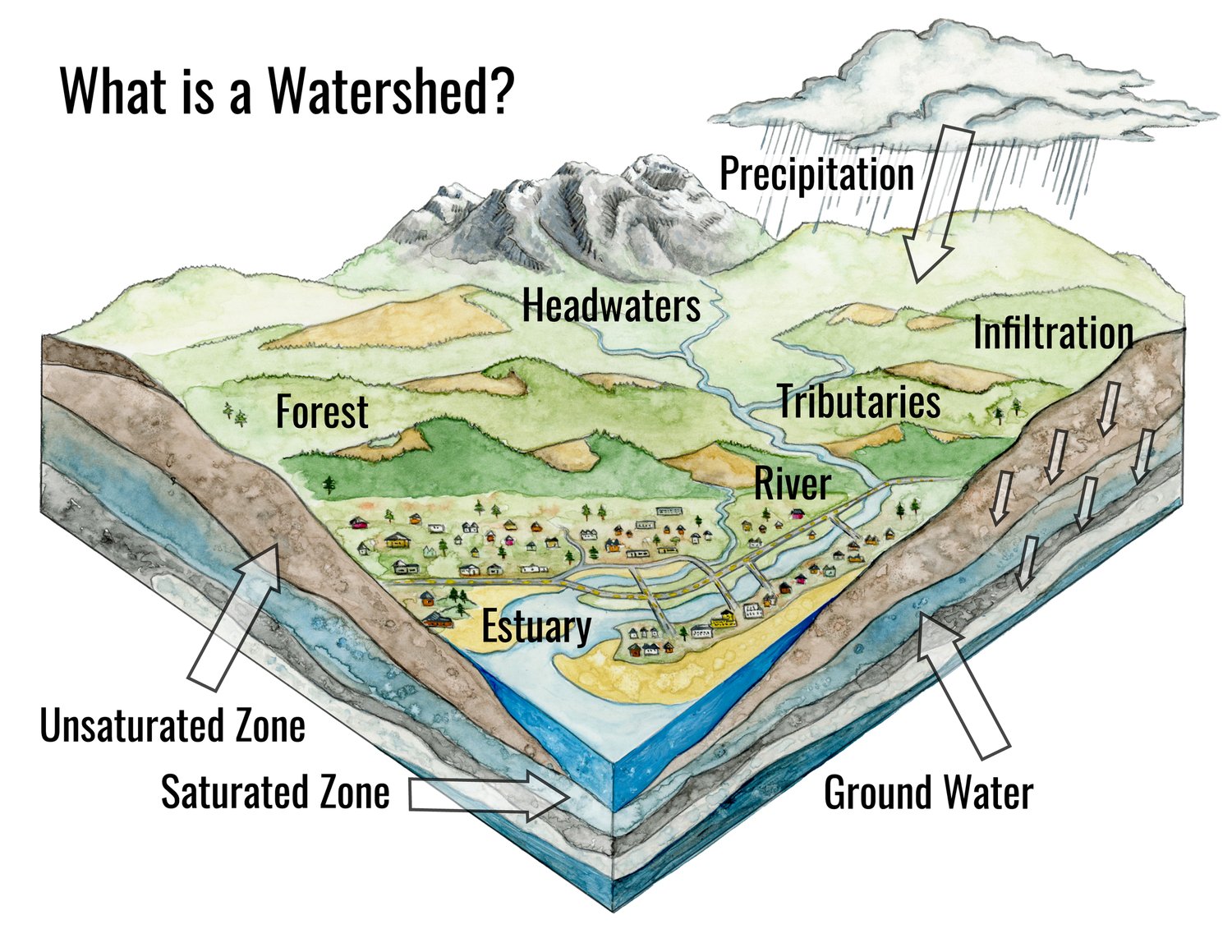
Did you know that stormwater produces water for our watersheds? What is stormwater, and why does it matter?
Stormwater is any precipitation that falls from the sky, including rain, hail, and snow. In natural landscapes without development, stormwater is absorbed into the ground or falls into bodies of water. This gives needed water to plants and animals and replenishes surface and groundwater.
Why is stormwater runoff a problem?
Stormwater can pick up debris, chemicals, dirt, and other pollutants and flow into a storm drainage system or directly into a local waterway. Anything that enters the storm drainage system flows directly into the waterbodies we use for swimming, fishing, and providing drinking water.
Polluted stormwater runoff can have many adverse effects:
- Sediment can cloud the water and make it difficult or impossible for aquatic plants to grow. Sediment can also destroy aquatic habitats.
- Excess nutrients can cause algae blooms. When algae die, they sink to the bottom and decompose, removing oxygen from the water. Fish and other aquatic organisms can't survive in water with low dissolved oxygen levels.
Pollutants on land can reach waterbodies that are miles away.
- Bacteria and other pathogens can wash into swimming areas and create health hazards, often making beach closures necessary.
- Debris – plastic bags, six-pack rings, bottles, and cigarette butts that wash into our waterways can choke, suffocate, or disable aquatic life like ducks, fish, turtles, and birds.
- Common household products can have an adverse effect on our waterways.
- Household hazardous waste, such as insecticides, pesticides, paint solvents, used motor oil, and other auto fluids, can poison aquatic life. Land animals and people can become extremely ill from eating diseased fish and shellfish or ingesting polluted water.
- Polluted stormwater often affects drinking water sources. This, in turn, can affect human health and water treatment costs.
Here are a few ways you can be the solution to water pollution!
- Properly dispose of household products containing chemicals. Don't pour them onto the ground or into storm drains!
- Instead of washing your car at home, take it to a car wash. A commercial carwash treats or recycles the wastewater.
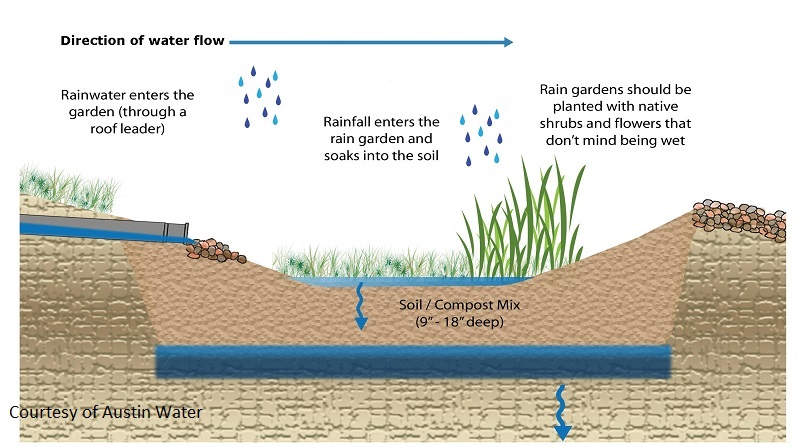
- Plant a rain garden and provide a natural place for stormwater to soak into the ground.
- When walking your furry friends, be sure to pick up the waste and dispose of it properly.